
Searching for an Agadir surf camp? MarySol is based just 45 minutes up the coast in Tamri — daily surf lessons on a sandy beach break, private or shared rooms, and easy transfers straight from Agadir Al Massira Airport.
There’s no shortage of surf camps advertised near Agadir. Here’s what actually sets this one apart, beyond the transfer distance.
Tamri is a sandy-bottomed beach break, which makes it noticeably more forgiving than the rocky points closer to Taghazout — fewer rocks to worry about, and a wide, peaky swell with multiple take-off points rather than one crowded peak. It also holds swell consistently, often still working when spots nearer Agadir go flat.
| Condition | What to expect |
|---|---|
| Seabed | Sand (beach break) |
| Best tide | Low to mid |
| Best wind | South-easterly (offshore) |
| Suitable for | Beginner to intermediate; uncrowded sessions for advanced surfers too |
| Season | Surfable year-round |
Unlike many surf camps near Agadir that pack guests into 6–8 person dormitories, rooms here hold a maximum of 3 guests each — a real bed and your own space to actually rest between sessions, not just a bunk in a shared room.
A comfortable ensuite room for solo travelers or couples, with everything you need to sleep well after a full day in the water.
Ideal for friends traveling together — three separate beds, ensuite bathroom, and enough room to spread out your gear.
Spacious enough for a small family or group of friends who want to stay together, with all the comforts of the other rooms.
All rooms are part of La Bananeraie SurfCamp, our property in Tamri — with a shared pool, covered terrace, and common lounge areas where most of the trip’s social time happens between surf sessions.
Both packages are based at the same camp in Tamri — the difference is length and pace.
| Chill & Surf | Ultimate Surf | |
|---|---|---|
| Duration | 5 Days, 4 Nights | 7 Days, 6 Nights |
| Price | From €330 pp | From €550 pp |
| What’s included |
|
|
| Best for | A short surf trip without a full week away | The full surf experience, fully settled in |
Agadir itself doesn’t have great surf — most camps that market themselves as “Agadir surf camps” are actually based further up the coast, closer to Taghazout or, in our case, Tamri, where the swell is far more consistent. Agadir just refers to the nearest airport and city, not the surf spot itself.
No. Tamri’s sandy bottom is more forgiving than the rocky points further south, making it a solid choice for a first surf trip with guided lessons. Intermediate surfers benefit too, from less time waiting between waves.
Swimwear, a rash guard, sunscreen, comfortable clothes for evenings, and a light jacket for cooler nights. The camp provides wetsuits and boards, so you don’t need to bring your own.
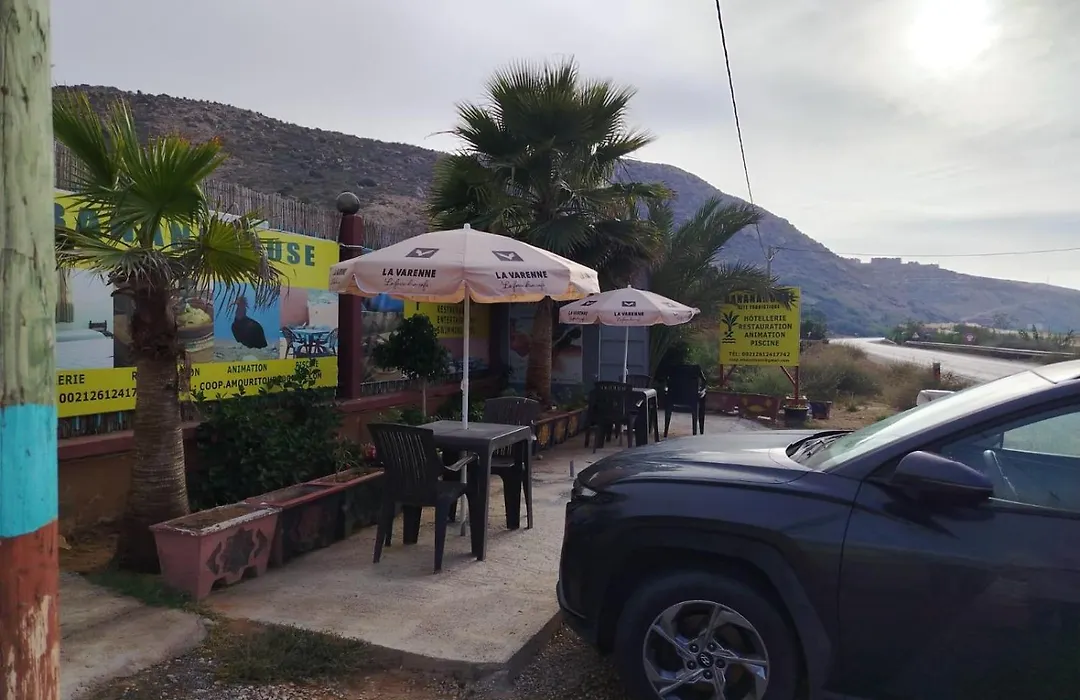
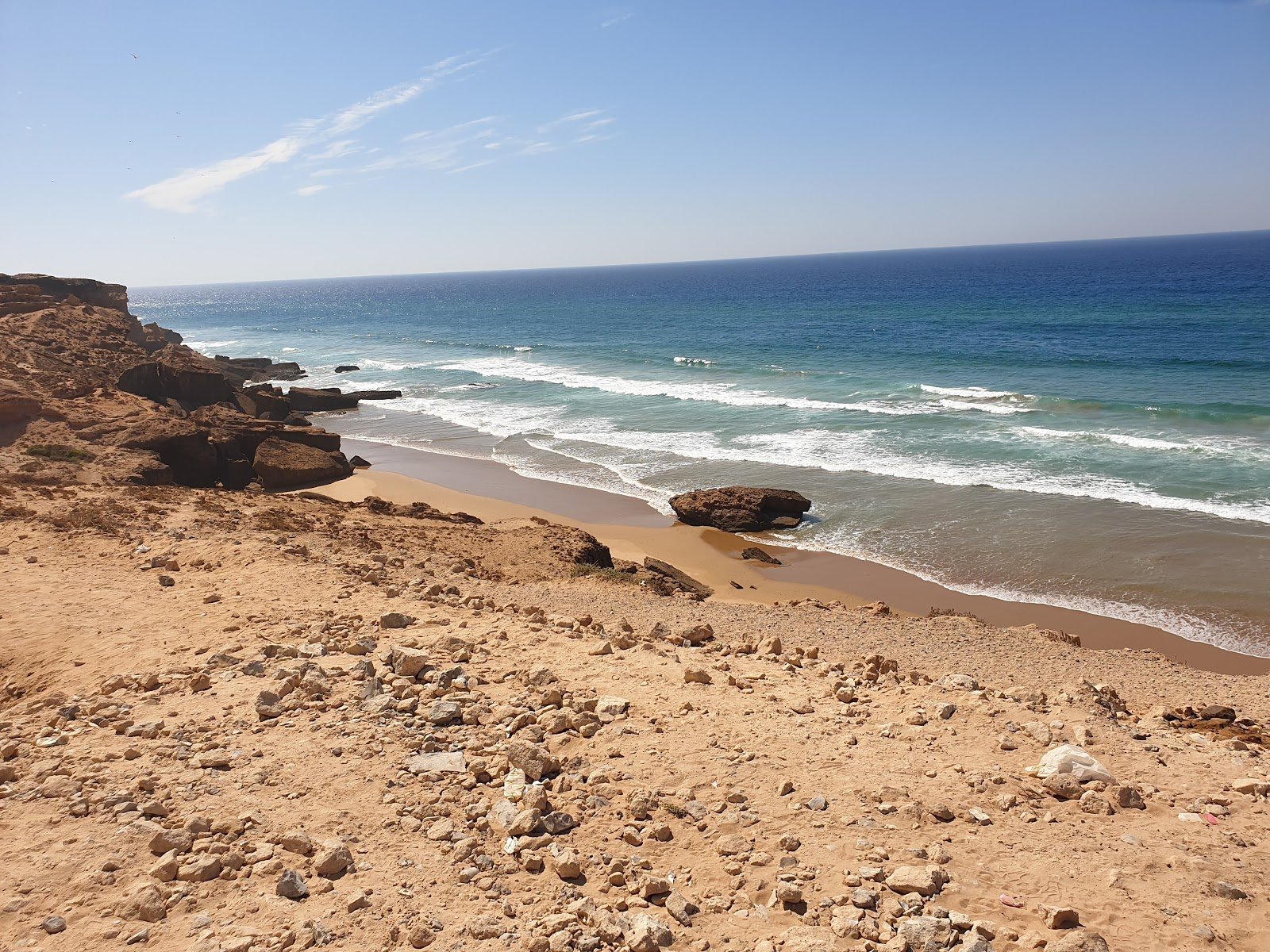
The camp is based in Tamri, about 45–60 minutes north of Agadir by car. Most surf camps near Agadir, including this one, are based further up the coast where the waves are more consistent, with easy transfers from Agadir Al Massira Airport.
The full 7-day / 6-night package starts from €550 per person. A shorter 5-day / 4-night option is also available from €330 per person. Both are available as private or group bookings.
Accommodation, daily surf lessons with equipment, breakfast, group meals, and airport pickup from Agadir. Flights, travel insurance, and personal expenses are not included.
Rooms accommodate up to 3 guests each, unlike many surf camps that use 6–8 person dormitories. Choose from a standard room, a twin/triple room, or a family/group room, depending on whether you’re traveling solo, as a couple, or with friends.
Yes. The sandy beach break is more forgiving than the rocky points closer to Taghazout, making it a solid choice for a first surf trip with guided lessons.
This stretch of coast surfs year-round. Autumn through spring brings bigger, more consistent swells, while summer offers smaller, gentler waves that suit beginners along with warmer water.
About 45 to 60 minutes by car. Airport pickup can be arranged when you book your package.
Private or group departures available year-round from Tamri. Message us on WhatsApp for availability, or book directly.

Votre spot surf maroc, sans compromis : cours de surf quotidiens sur le beach break de sable de Tamri, hébergement à La Bananeraie SurfCamp, et un rythme vraiment reposant.
Chaque jour à MarySol suit le même rythme tranquille, du lever au coucher du soleil.
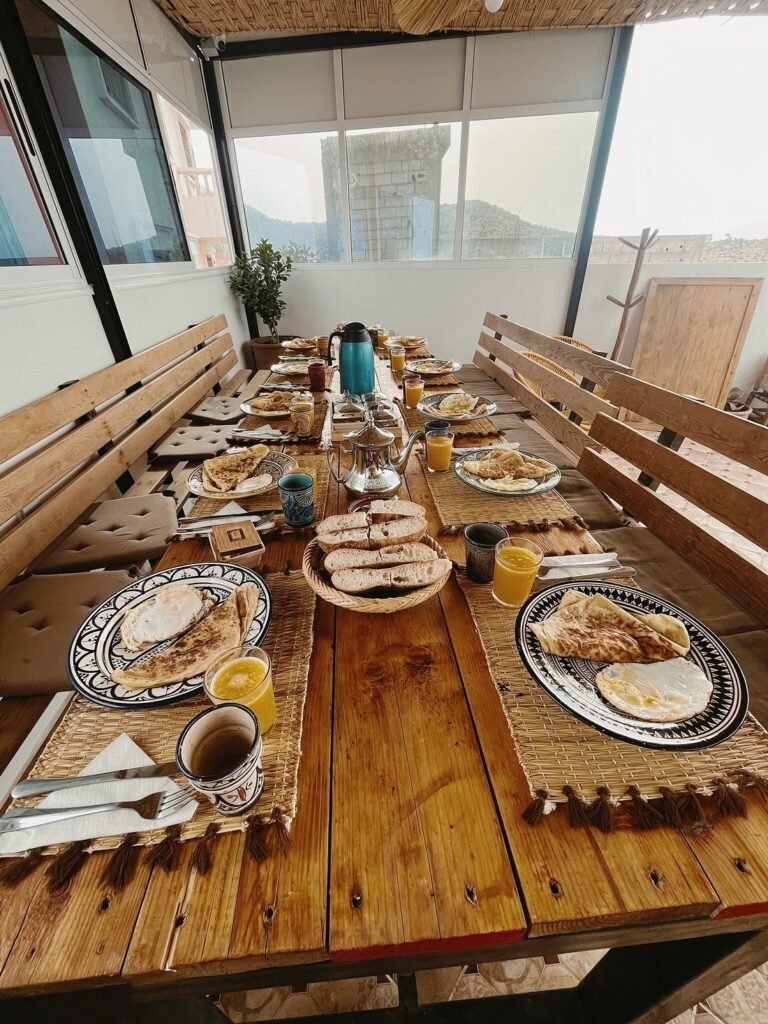
Sbah Al Khir (bonjour) ! La journée démarre avec notre petit-déjeuner maison : pain frais tout juste sorti de la boulangerie du village et odeur de café fraîchement torréfié. Installez-vous, prenez votre temps pour vous réveiller en douceur. À la fin du repas, vos paniers-repas faits maison sont prêts à être récupérés pour la journée.
Notre équipe prépare le matériel et organise les groupes avant le transfert vers la plage. Une fois sur le spot choisi selon la houle et le niveau de chacun, votre coach commence par les bases sur le sable, avant de passer à l’eau dès que vous êtes prêt à attraper vos premières vagues.
Panier-repas, eau minérale et fruits frais, directement sur la plage, entre deux sessions et face à l’océan.
Deuxième session encadrée par nos coachs, qui analysent votre surf et vous donnent des conseils personnalisés pour progresser. Pour ceux qui préfèrent souffler, temps libre pour nager ou simplement profiter du soleil sur le sable.
Rangement du matériel et transfert retour vers le SurfCamp, le long de la côte de Tamri, à travers les bananeraies.
Temps libre au SurfCamp : douche, farniente, lecture au bord de la piscine ou dans l’un de nos coins détente. Les enfants peuvent jouer entre eux pendant que vous profitez d’un thé à la menthe ou d’une boisson fraîche à notre coffee bar, The Sandpit. C’est aussi le bon moment pour explorer le marché du village de Tamri ou passer par le café La Bananeraie, juste en face du camp, au cœur des bananeraies.
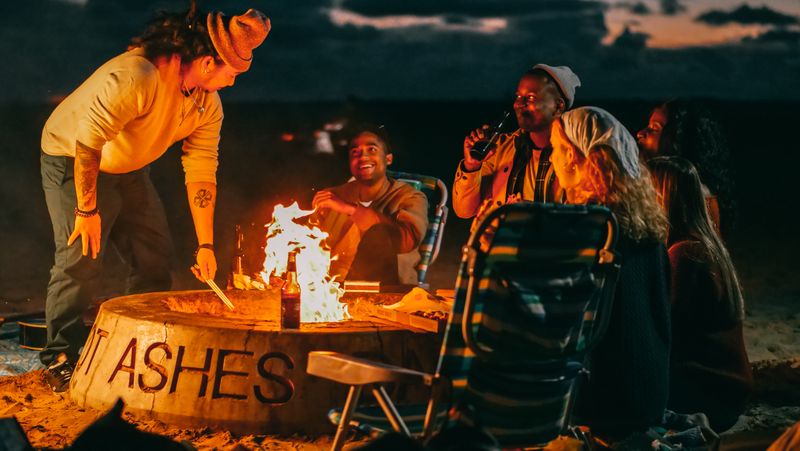
Pendant que vous profitiez de votre journée à la plage, notre chef préparait un dîner en 3 services : entrée (salade, tapas ou soupe), plat principal (tajine, pâtes, grillades ou couscous), et dessert pour les gourmands. Une option végétarienne est disponible sur demande. Après le dîner, direction la terrasse en rooftop ou la piscine pour des jeux de société ou simplement du temps calme. Certains soirs, un groupe de musique locale vient animer le camp et initier les invités aux danses traditionnelles ; d’autres soirs, on se retrouve autour d’un feu de camp (supplément possible pour ces animations spéciales).
Les deux formules se déroulent sur le même camp à Tamri — seule la durée change.
| Chill & Surf | Ultimate Surf | |
|---|---|---|
| Durée | 5 Jours, 4 Nuits | 7 Jours, 6 Nuits |
| Prix | Dès 330€ pp | Dès 550€ pp |
| Idéal pour | Un court séjour surf sans y consacrer une semaine complète | L’expérience complète de ce spot surf maroc, sans se presser |
Pas vraiment — et c’est tout l’intérêt. La plupart des séjours surf au Maroc se concentrent sur Taghazout, dont les spots peuvent être bondés. Tamri se trouve 45 minutes plus au nord, avec un large beach break de sable et beaucoup moins de monde à l’eau.
Non. Le fond de sable de Tamri est bien plus indulgent que les spots rocheux plus au sud, ce qui en fait un excellent choix pour un premier séjour surf encadré. Les surfeurs de niveau intermédiaire y gagnent aussi, avec moins d’attente entre les vagues.
Maillot de bain, t-shirt anti-UV, crème solaire, vêtements confortables pour le soir, et une veste légère pour les nuits plus fraîches. Le camp fournit combinaisons et planches, inutile d’apporter les vôtres.
Le transfert se fait depuis l’aéroport d’Agadir Al Massira, à environ 45–60 minutes du camp. Il est organisé à l’arrivée comme au départ, à confirmer lors de la réservation.
Les formules démarrent à 330€ par personne pour 5 jours / 4 nuits, ou 550€ par personne pour la formule complète de 7 jours / 6 nuits. Les deux sont disponibles en privé ou en groupe.
L’hébergement à La Bananeraie SurfCamp, les cours de surf quotidiens avec équipement, le petit-déjeuner et les repas partagés. Les vols, l’assurance voyage et les dépenses personnelles ne sont pas inclus.
Oui. Le fond de sable de Tamri est bien plus indulgent que les spots rocheux près de Taghazout, ce qui en fait un excellent choix pour un premier séjour surf, surtout avec des cours encadrés.
Le Maroc se surfe toute l’année. De l’automne au printemps, les houles sont plus grosses et plus régulières, tandis que l’été offre des vagues plus douces, idéales pour les débutants, avec une eau plus chaude.
Oui, une aisance de base dans l’eau est nécessaire pour la sécurité, même s’il n’est pas nécessaire d’être un nageur expérimenté pour suivre un cours débutant.
Le camp se trouve à environ 45 à 60 minutes en voiture de l’aéroport d’Agadir Al Massira. Le transfert depuis l’aéroport peut être organisé au moment de la réservation.
Départs privés ou en groupe toute l’année depuis Tamri. Écrivez-nous sur WhatsApp pour les disponibilités, ou réservez directement.
Most people planning a surf holiday Morocco style head straight for Taghazout — but Tamri, a quiet village 45 minutes further up the coast, is where the same holiday gets better: consistent waves, a genuinely slow pace, and none of the crowds. Here’s what it looks like, and how to book yours.
In this guide
| Location | Tamri, Souss-Massa region, Morocco |
| Distance from Agadir | ~45–60 min by car, ~59 km |
| Wave type | Sandy beach break, forgiving and consistent |
| Recommended length | 5–7 days |
| Best for | Beginners to intermediate; uncrowded sessions for advanced surfers too |
| Base | La Bananeraie SurfCamp, Tamri |
A surf holiday Morocco trip almost always starts with the same recommendation: Taghazout. It’s the region’s best-known surf town, and for good reason — but its points get crowded, especially in peak season. Tamri, about 45 minutes further north, holds swell just as consistently on a sandy beach break, without the fight for waves.
That difference shapes the whole trip. Fewer people in the water means more waves per session, less pressure if you’re still finding your feet, and days that move at their own pace rather than around someone else’s schedule.
Good to know: Tamri sits roughly midway between Taghazout and Imsouane, so a day trip to either is easy if you want to explore further during a longer surf holiday.
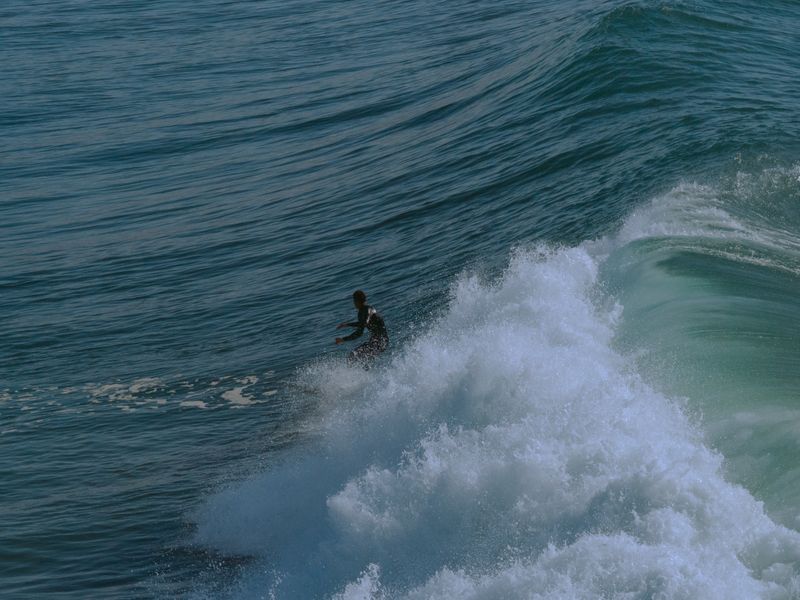
Tamri’s beach break is sandy-bottomed and noticeably more forgiving than the rocky points further south — a wide, peaky swell with multiple take-off points rather than one crowded peak. It’s also one of the more consistent spots on this stretch of coast, often still holding swell when the points near Taghazout go flat.

Most days start with an early group breakfast, followed by a morning surf lesson or session while conditions are cleanest. Afternoons are unstructured — a second surf, a walk into the village, or simply resting. Evenings are for shared meals, which tend to be what people remember most once the holiday is over.

A surf holiday Morocco style doesn’t have to be surf-only. Rest days are usually spent at the Timlalin Dunes for sandboarding and quad biking, or on a half-day trip to Paradise Valley for its natural rock pools and palm groves. Camel rides along the beach and through the surrounding banana plantations are easy to arrange locally too.
Staying directly in Tamri means waking up steps from the break, rather than commuting each morning — which is why MarySol SurfCamp is based at La Bananeraie SurfCamp, nestled among the banana farms a short walk from the beach.


Every surf holiday Morocco package at Tamri includes accommodation, daily surf lessons with equipment, and meals — the difference is length and pace.
The full surf and destination experience — for anyone who wants the trip fully handled so they can just surf, eat well, and settle into the rhythm of Tamri.
The shorter surf holiday — a few solid days in the water without needing a full week away.
See full package details and current availability at Tamri.
Most surf holidays center on Taghazout, but Tamri — about 45 minutes further north — offers a quieter, more consistent beach break with far fewer crowds.
5 to 7 days is usually enough to build real comfort in the water while leaving time for rest days and other activities.
Yes — the sandy bottom is more forgiving than the rocky points further south, making it a solid choice for a first surf holiday with guided lessons.
Accommodation, daily surf lessons with equipment, breakfast, and group meals — see the surf packages page for full details.
Morocco surfs well year-round. Autumn through spring brings bigger, more consistent swells, while summer offers smaller, gentler waves that suit beginners, plus warmer air and water.
Yes — basic swimming ability is required for safety in the water. You don’t need to be a strong swimmer, but you should be comfortable treading water before a lesson.
Swimwear, a rash guard, sunscreen, comfortable clothes for evenings, and a light jacket for cooler nights. Camps usually provide wetsuits and boards.
Not usually. Water temperatures range from around 17°C in winter to 22°C in summer, so most surfers wear a wetsuit year-round.
Yes — shared accommodation, group lessons, and communal meals make it easy to meet other travelers, even if you’re arriving on your own.
Most camps arrange pickup from Agadir Al Massira Airport, about 45–60 minutes away by car. Confirm transfer options when you book.
Yes — the Agadir and Taghazout coastal region is a well-established, tourist-friendly area with an active surf tourism industry. Normal travel precautions apply.
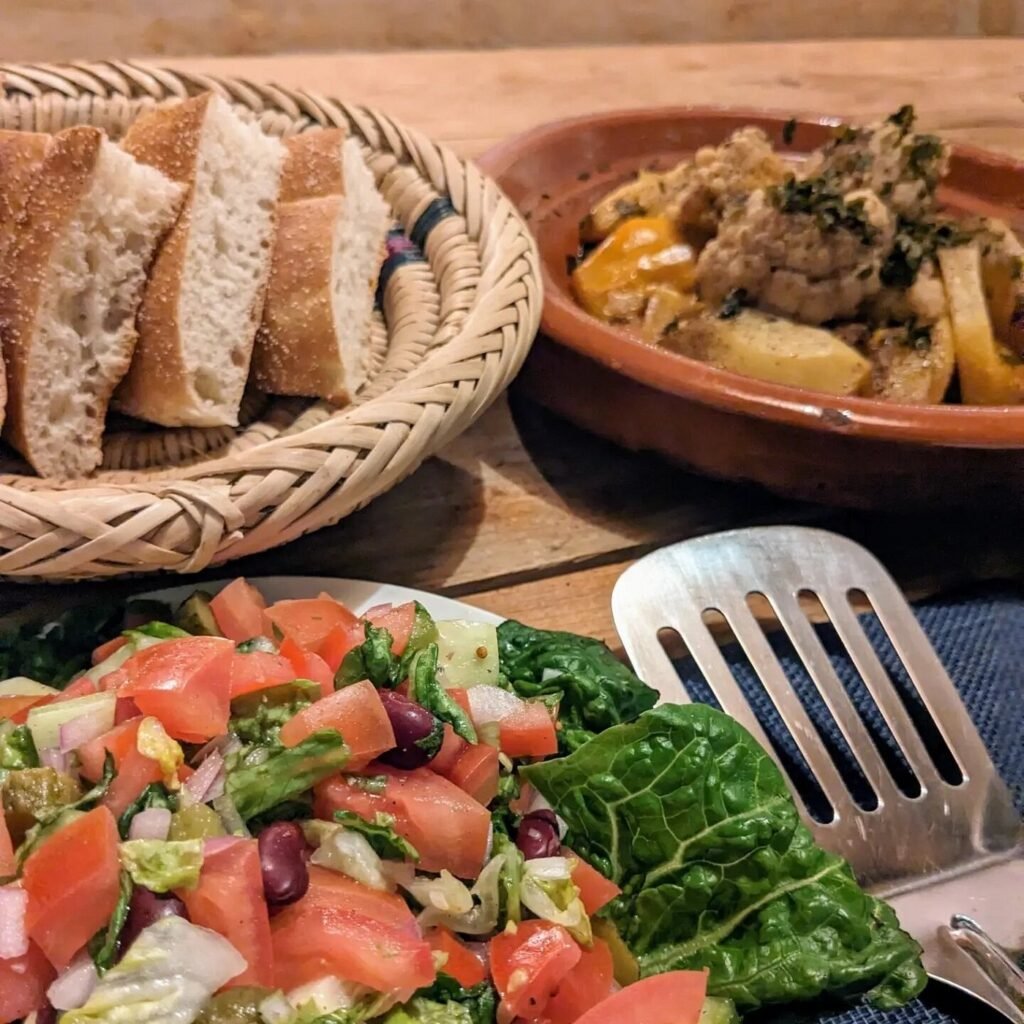
A mix of traditional Moroccan dishes like tagine and couscous alongside international meals, with vegetarian options usually available on request.
Ready to plan your surf holiday Morocco style? Browse our surf packages, check out life at the camp, or see our activities and excursions.
A surf soul adventure isn’t just about the waves — it’s the slower mornings, the shared meals, and the days that don’t run on a schedule. Tamri, a quiet village on Morocco’s Atlantic coast, is where that kind of trip actually happens. Here’s what it looks like, and how to book yours.
In this guide
| Location | Tamri, Souss-Massa region, Morocco |
| Distance from Agadir | ~45–60 min by car, ~59 km |
| Wave type | Sandy beach break, forgiving and consistent |
| Recommended length | 5–7 days |
| Best for | Anyone who wants surf plus a genuine slow-down |
| Base | La Bananeraie SurfCamp, Tamri |

Plenty of trips promise waves. Fewer actually deliver the feeling people are chasing when they search for a surf soul adventure — that mix of physical challenge, slower living, and a genuine change of pace. Tamri gets there because of what it doesn’t have: no crowded lineups, no packed schedule, no rush between activities.
Instead, a surf soul adventure here means mornings shaped by the tide, afternoons that are genuinely yours, and evenings spent around a shared table rather than scrolling through options for what to do next.
Good to know: Tamri sits about 45 minutes north of Taghazout, far enough to skip the crowds but close enough that a day trip back down the coast is easy if you want one.

A typical day starts with an early breakfast, followed by a morning surf lesson or session while conditions are cleanest. Afternoons are open — a second surf, a walk into the village, or simply resting. Evenings are for shared meals and slow conversation, which tends to be what people remember most once the trip is over.

Rest days extend the surf soul adventure beyond the water — the Timlalin Dunes for sandboarding and quad biking, a half-day trip to Paradise Valley, or camel rides through the surrounding banana plantations are all easy to arrange locally.

Your base for the trip is La Bananeraie SurfCamp, nestled among Tamri’s banana farms a short walk from the beach — the kind of place that makes a surf soul adventure feel unhurried rather than packaged.

Every package for your surf soul adventure at Tamri includes accommodation, daily surf lessons with equipment, and meals — the difference is length and pace.
The full surf and destination experience — for anyone who wants the trip fully handled so they can just surf, eat well, and settle into the rhythm of Tamri.
The shorter version — a few solid days in the water without needing a full week away.
See full package details and current availability at Tamri.
The scenery around Tamri is as much a part of the surf soul adventure as the waves themselves — the estuary, the dunes, and the open coastline.


Consistent, beginner-friendly waves paired with a genuinely slow pace of life — few crowds, shared camp meals, and easy access to dunes and valleys on rest days.
5 to 7 days is usually enough to build real comfort in the water while still leaving room for rest and slower moments.
Yes — the sandy bottom is more forgiving than the rocky points further south, making it a solid choice for a first surf trip with guided lessons.
Accommodation, daily surf lessons with equipment, breakfast, and group meals — see the surf packages page for full details.
Ready to start your surf soul adventure? Browse our surf packages, check out life at the camp, or see our activities and excursions.
Most people who want to surf Agadir Morocco end up in Taghazout — but Tamri, about 45 minutes further up the coast, is quietly the better base for it: a consistent, forgiving beach break with none of the crowds. Here’s why, and what staying there actually looks like.
In this guide
| Location | Tamri, Souss-Massa region, Morocco |
| Distance from Agadir | ~45–60 min by car, ~59 km |
| Wave type | Sandy beach break, forgiving and consistent |
| Best for | Beginners to intermediate; uncrowded sessions for advanced surfers too |
| Base | La Bananeraie SurfCamp, Tamri |

Almost everyone searching to surf Agadir Morocco gets pointed toward Taghazout, about 20 minutes from the city and undeniably the region’s most famous surf town. But Tamri, a further 25–35 minutes north, offers something Taghazout’s crowded points can’t: a sandy-bottomed beach break that holds swell consistently, without fighting for space in the lineup.
For anyone planning to surf Agadir Morocco properly rather than just tick a box, that difference matters — fewer people in the water means more waves per session and a genuinely slower pace to the whole trip.
Good to know: Agadir Al Massira Airport is the main gateway for this stretch of coast. Tamri sits about 45–60 minutes north by car, still well within easy reach for a week-long trip.
Tamri’s beach break is noticeably more forgiving than the rocky points closer to Agadir — fewer rocks, a wide peaky swell, and multiple take-off points along the beach rather than one crowded peak. It’s also one of the more consistent spots on this coast: when the points near Agadir go flat, Tamri’s exposed beach often still holds swell.

Rest days from your surf Agadir Morocco trip are usually spent at the Timlalin Dunes for sandboarding and quad biking, or on a half-day trip to Paradise Valley. Camel rides along the beach and through the banana plantations are easy to arrange locally too.

Around 45–60 minutes by car or taxi, roughly 59 km north along the N1 coastal highway — the same road used to reach Taghazout, just continuing further up the coast.

Staying directly in Tamri means waking up steps from the break, rather than commuting from Agadir or Taghazout each morning — which is why MarySol SurfCamp is based at La Bananeraie SurfCamp, nestled among the banana farms a short walk from the beach.

Every package for your surf Agadir Morocco trip at Tamri includes accommodation, daily surf lessons with equipment, and meals.
The full surf and destination experience — for anyone who wants the trip fully handled so they can just surf, eat well, and settle into the rhythm of Tamri.
The shorter surf trip — a few solid days in the water without needing a full week away.
See full package details and current availability at Tamri.
Most surfers head to Taghazout, but Tamri — about 45 minutes from Agadir — offers a quieter, more consistent beach break with far fewer crowds.
Around 45–60 minutes by car, roughly 59 km, along the N1 coastal highway.
Yes — the sandy bottom is more forgiving than the rocky points closer to Agadir, making it a solid choice for first-time surfers with a guide.
Accommodation, daily surf lessons with equipment, breakfast, and group meals — exact inclusions vary by package. See the surf packages page for details.
Ready to surf Agadir Morocco without the crowds? Browse our surf packages, check out life at the camp, or see our activities and excursions.
If you’re planning a surf trip Maroc, Tamri is one of the best-kept bases for it — a quiet village on the Atlantic coast with a consistent, forgiving beach break and none of the crowds you’ll find further south. Here’s what a surf trip to Tamri actually looks like, and how to book yours.
In this guide
| Location | Tamri, Souss-Massa region, Morocco |
| Wave type | Sandy beach break, forgiving and consistent |
| Best for | Beginners to intermediate; solid uncrowded sessions for advanced surfers too |
| Recommended trip length | 5–7 days |
| Distance from Agadir | ~45–60 min by car |
| Base | La Bananeraie SurfCamp, Tamri |
Most surf trips to Maroc are built around Taghazout, and for good reason — it’s the region’s best-known surf town. But Tamri, about 45 minutes further north, offers something different: a sandy-bottomed beach break that holds swell consistently, without the lineup crowds that come with Taghazout’s famous points.
For a surf trip, that matters. Fewer people in the water means more waves per session, less pressure for beginners still finding their feet, and a genuinely relaxed pace — mornings in the water, afternoons free, evenings spent around the camp rather than fighting traffic between surf spots.
Good to know: Tamri sits roughly midway between Taghazout and Imsouane on Morocco’s Atlantic coast, so it’s still an easy day-trip distance from both if you want to explore further during your stay.
A typical day on a Tamri surf trip starts with an early group breakfast, followed by a morning surf lesson or guided session while the wind is still clean. Afternoons are unstructured — some people go back out for a second surf, others head to the pool, explore the village, or join an excursion. Evenings are for shared meals and slow conversations, which is usually what people remember most from the trip.
A surf trip to Tamri doesn’t have to be surf-only. Rest days are usually spent at the Timlalin Dunes for sandboarding and quad biking, or on a half-day trip to Paradise Valley for its natural rock pools and palm groves. Camel rides along the beach and through the surrounding banana plantations are also easy to arrange locally — and the village itself, with its small roadside cafes tucked among the palms, is worth a slow wander on a rest day.
Your base for the trip is La Bananeraie SurfCamp, nestled among Tamri’s banana farms a short walk from the beach — comfortable rooms, a pool, and shared spaces where the trip’s social side happens naturally between surf sessions.
Every surf trip Maroc package here includes accommodation, daily surf lessons with equipment, and meals — the difference is length and pace.
The full surf and destination experience — for anyone who wants the trip fully handled so they can just surf, eat well, and settle into the rhythm of Tamri.
The shorter surf trip — a few solid days in the water without needing a full week away.
See full package details, current availability, and everything included.
Most surf trip Maroc itineraries at Tamri run 5 to 7 days: a morning surf session, free afternoons, and relaxed evenings at the camp with other travelers.
Yes — the sandy beach break is more forgiving than the rocky points further south, making it a solid choice for a first surf trip with guided lessons.
5 to 7 days is usually enough to build real comfort in the water while leaving room for rest days and other activities.
Accommodation, daily surf lessons with equipment, breakfast, and group meals — exact inclusions vary by package. See the surf packages page for full details.
Ready to plan your surf trip Maroc? Browse our surf packages, take a look at the camp, or explore our activities and excursions for rest days.
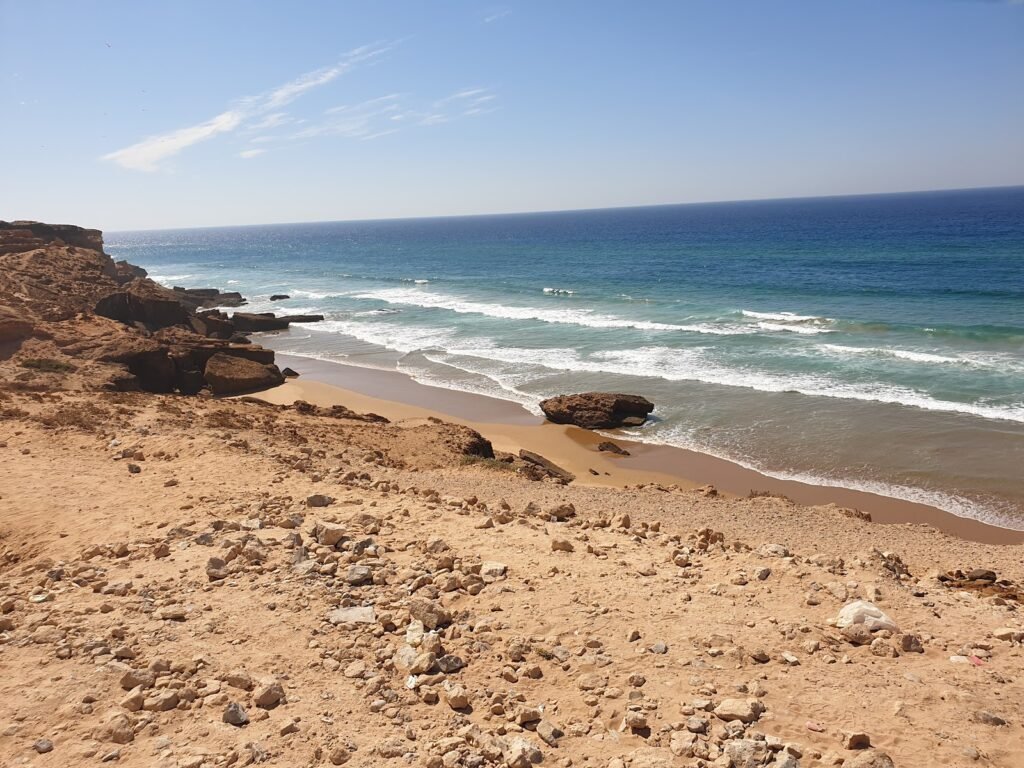
Tamri Beach Morocco sits quietly on the Atlantic coast, about 45 minutes north of Taghazout — a consistent sandy beach break that’s often overlooked in favor of its more famous neighbor. This guide covers where Tamri Beach Morocco is, what the surf is actually like, how it connects to the Timlalin Dunes, and what to expect if you’re planning a visit.
In this guide
| Location | Souss-Massa region, Atlantic coast, Morocco |
| Distance from Taghazout | ~30–45 min by car (N1 coastal road) |
| Distance from Agadir | ~45–60 min by car, ~59 km |
| Wave type | Beach break, sandy bottom |
| Suitable for | All levels, with guidance for beginners on bigger days |
| Nearby landmark | Timlalin Dunes (sandboarding, quad biking) |
| Known for | Banana plantations, estuary birdlife, consistent swell |

Tamri is a small village on Morocco’s Atlantic coast, in the Souss-Massa region, roughly 45 minutes north of Taghazout and about an hour from Agadir along the N1 coastal highway. The beach sits where the Tamri River meets the ocean — that river valley is what feeds the banana plantations the area is known for, and locals sometimes call Tamri the “second Banana Village” of the region.
In short: Tamri Beach → Tamri village → Souss-Massa region → Morocco’s Atlantic coast → roughly midway between Taghazout and Imsouane.
Surfing at Tamri Beach Morocco means a sandy-bottomed beach break, which makes it noticeably more forgiving than the rocky point breaks further south around Taghazout and Anza. The sand bottom means fewer rocks to worry about, and the open beach offers a wide, peaky swell with multiple take-off points rather than one crowded peak.
It’s also one of the more consistent breaks on this stretch of coast. When Taghazout goes flat, surfers here often head to Tamri, since the exposed beach picks up swell that the sheltered points further south can miss. More experienced surfers look for the left-hander that can form off the sandbank near the cliffs at the northern end of the beach — one of the few reliable lefts in the immediate area.
| Condition | What to expect |
|---|---|
| Seabed | Sand (beach break) |
| Best tide | Low to mid |
| Best wind | South-easterly (offshore) |
| Typical swell range | 1–4 ft, holds bigger swell well |
| Crowd factor | Generally quieter than Taghazout’s main points |
Good to know: Currents at Tamri can pull surfers and swimmers further down the beach than expected. If you’re new to the spot, it’s worth surfing with a guide or instructor who knows the sandbars — especially on bigger days. Tamri is not always safe for unsupervised beginners; conditions vary day to day.


Tamri Beach Morocco works for a wide range of ability levels, but it suits some travelers better than others:
The Timlalin Dunes are coastal sand dunes a short drive from Tamri village, roughly between Tamri and Imsouane, where the desert meets the Atlantic. Most operators quote the dunes as 45–75 minutes from Agadir by car, with the dunes themselves just outside Tamri.
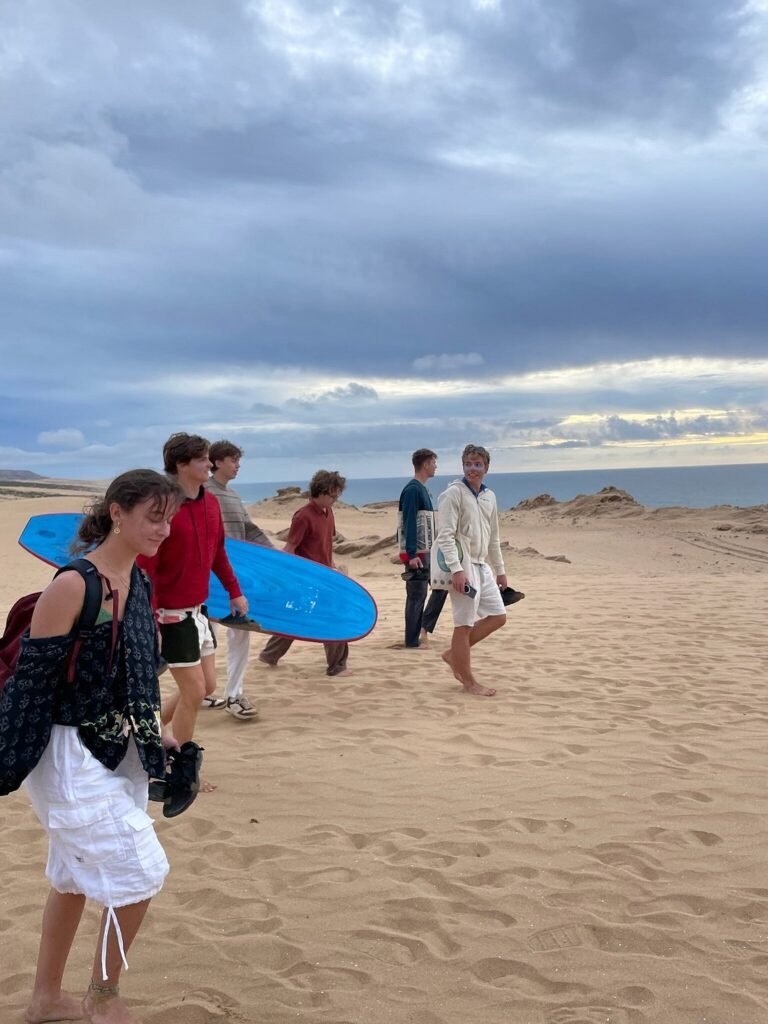
The dunes are the area’s main non-surf attraction — sandboarding, quad biking, camel rides, and short canyon walks, usually with sweeping ocean views from the ridgelines. Many day-trip operators combine a Tamri stop with a Timlalin dunes session, since the two sit close together along the same stretch of coast.


Surfing and the dunes aside, Tamri rewards anyone willing to slow down for a day or two:

Around 45–60 minutes by car or taxi, roughly 59 km north along the N1 coastal highway. Shared taxis (grand taxis) also run this route.
Around 30–45 minutes by car, continuing north on the same coastal road.
Around 30 minutes by car, heading south along the coast — Tamri sits roughly midway between Taghazout and Imsouane.
Tamri holds swell year-round thanks to its exposed position, with cleanest conditions generally coming with a south-easterly (offshore) wind and a low-to-mid tide. Spring and autumn bring milder temperatures for exploring the dunes and plantations on foot, while summer suits longer beach days and warmer water. For dune activities specifically, most local operators recommend October–April, when the sand is cooler and more comfortable underfoot.
Because Tamri Beach Morocco itself has limited tourist infrastructure, many visitors base themselves in Taghazout or Agadir and treat Tamri as a day trip. Staying directly in Tamri means waking up steps from the break with none of the crowds — which is why MarySol SurfCamp is based right here, at La Bananeraie SurfCamp, nestled among the banana farms a short walk from the beach.
Comfortable rooms, a pool, and daily surf lessons a few minutes from Tamri Beach — with dune trips and Paradise Valley excursions available too.
On the Atlantic coast in the Souss-Massa region, roughly 45 minutes north of Taghazout and about an hour from Agadir along the N1 coastal highway, where the Tamri River meets the ocean.
Yes, in the right conditions and with guidance. The sandy bottom is more forgiving than nearby rocky points, but currents can be strong — beginners should surf with an instructor who knows the sandbars, especially on bigger days.
Around 30–45 minutes by car along the N1 coastal road.
Around 45–60 minutes by car, roughly 59 km, along the N1 coastal highway.
Coastal sand dunes just outside Tamri village, between Tamri and Imsouane, known for sandboarding, quad biking, and camel rides with ocean views.
Yes — many visitors combine a morning surf session at Tamri with an afternoon at the dunes, since they sit close together along the same stretch of coast.
Planning a trip to Tamri Beach Morocco? Explore our activities and excursions, check out life at the camp, or head straight to our surf packages to book your stay.
Surf Camp Maroc — Guide
A surf camp Maroc trip means picking a base — and Tamri is one of the most reliable choices on the whole coast. Consistent A-frame peaks work across most tides and swell sizes, the current stays manageable with a guide, and the village around it is real Moroccan life rather than a tourist strip. This guide covers what a surf camp in Tamri actually involves, when to go, and what the wave itself is like.
Last checked and updated 16 August 2026 — seasonal and travel details are reviewed periodically and may shift.
A surf camp Maroc trip based in Tamri means a sandy beach break with several A-frame peaks, working across most tides and swell sizes, suited to beginners through advanced surfers depending on the peak. It’s roughly 30–45 minutes north of the region’s busier tourist strip, surrounded by banana plantations rather than built-up development.

A surf camp here combines three things: a place to stay, gear (board and wetsuit rental), and guided sessions with someone who knows the beach’s shifting sandbanks. That last part matters more than it might elsewhere — Tamri isn’t one wave, it’s several A-frame peaks spread along the beach, and which one is working best changes with the tide, sometimes within the same session.
Camps vary in how much they build around the surf itself. Some are surf-only; others add day trips to Paradise Valley or a traditional hammam session on rest days. What’s included in board rental, meals, and excursions differs by operator, so it’s worth checking a camp’s package details directly rather than assuming.
Tamri is a beach break with a sandy bottom, which changes the whole character of a session compared with the rocky point breaks found elsewhere on this stretch of coast. Waves peel both left and right off shifting sandbanks, forming several A-frame peaks along the beach rather than one defined line-up. That spreads surfers out and gives goofy-footers a fairer share of rideable waves than a single-direction point.
The village itself sits surrounded by banana plantations, which give the area its unofficial nickname among local surfers: a second Banana Village. It’s quiet — everyday Moroccan village life continues around the surf rather than being shaped by it, which is exactly what draws people to a surf camp Maroc trip here over a busier stretch of coast.
Tamri’s exposed beach break picks up smaller, wind-driven swell that more sheltered spots miss entirely. When the forecast looks flat elsewhere, Tamri is usually still surfable — which is exactly why local surf guides treat it as the go-to on quiet days, not a fallback.
Tamri is more forgiving of a bad forecast than most spots nearby, but it still has a clearer and a quieter season.
| Season | Months | What to expect | Best suited to |
|---|---|---|---|
| Winter | Nov – Feb | Bigger, more powerful peaks; strongest currents of the year | Intermediate–Advanced |
| Shoulder | Sep–Oct & Mar–May | Consistent, moderate-sized A-frames — the sweet spot for most surfers | All levels |
| Summer | Jun – Aug | Smaller, softer waves; still working when other spots go flat | Beginner |
Because Tamri is a beach break rather than a point, it’s also more tide-dependent day to day than season to season — low to mid tide tends to expose the cleanest sandbanks, though this shifts after big winter swells rework the beach.
Whichever surf camp Maroc operator you book with in Tamri, knowing the wave itself helps. On any given day, two or three A-frame peaks are usually working along the beach, which means you can move if your peak gets crowded or stops working.
Tamri’s soft, sandy-bottomed peaks make it approachable for beginners, but the beach’s lateral current means it’s best surfed with a guide or instructor rather than solo, especially on a first visit.
Not every surf camp Maroc listing tells you the same thing, so it’s worth checking a few specifics directly with the operator:
Because a surf camp Maroc trip in Tamri sits away from the busier tourist strips, a day here runs at a different pace. Morning sessions tend to be the calmest, before onshore wind picks up. Between surfs, the banana plantations that ring the village are worth walking through, and the pace of Tamri itself — small cafés, a working fishing harbor nearby — is part of the appeal for surfers who want to be somewhere that isn’t built around tourism.
A surf camp Maroc trip in Tamri is a guided surf holiday based in the village — typically accommodation plus board and wetsuit rental and coached sessions across the beach’s changing A-frame peaks, sometimes with added extras like day trips or a hammam visit.
Yes. Tamri’s soft, sandy-bottomed peaks are forgiving for beginners. The trade-off is a noticeable lateral current, so a guided camp is worth it for a first trip rather than surfing solo.
There isn’t a single best month — it depends on ability. The shoulder months (September–October and March–May) offer the most consistent, moderate conditions for most levels, summer suits beginners best, and winter brings the biggest swell for more experienced surfers.
Often, yes. Its exposed beach break picks up smaller, wind-driven swell that more sheltered spots along the coast don’t — a key reason local guides check it first on a quiet day.
This varies by operator, but commonly includes accommodation, board and wetsuit rental, and guided surf sessions. Meals and non-surf excursions (day trips, hammam) are sometimes included and sometimes optional — check a specific camp’s package details before booking.
Board and wetsuit rental, guided sessions across Tamri’s changing peaks, and a home right where the wave is — a surf camp Maroc trip built around one wave, not a checklist.
Tamri, Morocco sits about 45 minutes north of Taghazout on the N1 coastal highway — a small village known for a sandy beach break, a protected bird estuary, and the Timlalin sand dunes just up the coast. It gets far less written about than Taghazout or Imsouane, despite offering a genuinely different side of Morocco’s surf coast.
Tamri, Morocco is known for three things: a consistent sandy-bottomed beach break that works when nearby points go flat, the Oued Tamri estuary — one of only two places on Earth with wild breeding colonies of the endangered Northern Bald Ibis (Geronticus eremita) — and the Timlalin sand dunes, a popular sandboarding spot roughly 20km further north.
| Location | Souss-Massa region, Atlantic coast, Morocco |
| From Taghazout | ~30-45 minutes by road (N1 coastal highway) |
| From Agadir | ~45-60 minutes (roughly 50-60km) |
| Known for | Beach break surfing, Northern Bald Ibis estuary, Timlalin dune sandboarding |
| Best surf months | September-May, with summer still workable when other spots are flat |
Unlike the right-hand point breaks that dominate this stretch of coast — Anchor Point, Boilers, Banana Point — Tamri is a sandy beach break with several shifting A-frame peaks, giving genuine lefts and rights rather than a single crowded line-up. It’s exposed to smaller, wind-driven swell that the more sheltered points around Taghazout and Tamraght miss, which is why local guides often check it first on a flat day. The break primarily picks up northwest groundswell, works best on light offshore wind from the east, and is generally cleanest around low to mid tide. We’ve written a full breakdown of the wave itself, tides, and beginner suitability in our complete Tamri surf guide.


Because Tamri is a beach break rather than a point, it has a noticeable lateral current running along the shore — manageable for experienced surfers, but the main reason beginners shouldn’t paddle out alone. Conditions shift with the tide and after big winter swells rework the sandbanks, so local knowledge matters more here than at a fixed point break.

Tamri is approachable for a range of levels, but its lateral current means it’s best surfed with a guide, especially on a first visit — which is why every session at MarySol runs with a local coach who reads the sandbanks and current before you paddle out.
One thing that sets a Tamri, Morocco trip apart from a day-trip out of Taghazout: dawn sessions before anyone else arrives, and dedicated on-session photography and video analysis included as part of a stay. Watching your own footage back with a coach — rather than just being told what you did wrong — is a faster way to actually fix a pop-up or a late takeoff.

About 20km north of Tamri, the Timlalin Dunes roll straight down to the Atlantic — a genuinely striking spot where the desert meets the ocean. Half-day trips typically combine sandboarding with a canyon walk, camel ride, or quad biking, and the dunes suit complete beginners as much as anyone chasing a bigger drop. October to April tends to bring cooler, more comfortable conditions for the sand itself.

Just north of the village, the Oued Tamri estuary is a protected wetland — not an official national park, despite the name sometimes being used loosely online, but a genuinely significant one. Together with nearby Souss-Massa National Park, it holds one of only two wild breeding colonies of the Northern Bald Ibis (Geronticus eremita) left on Earth, a species downlisted by the IUCN Red List from Critically Endangered to Endangered in 2018 after decades of conservation work. Beyond the ibis, the estuary attracts gulls, terns, herons and migrating waders — worth an hour on a flat morning even for non-birders.

Tamri is surrounded by banana plantations that give the area its local nickname — a second Banana Village — and everyday village life continues here largely undisturbed by tourism. A weekly souk brings the village to life with produce, argan products, and local crafts, and it’s a far quieter, more authentic slice of Morocco than the built-up strip further south. You can read more about what a day here actually looks like on our About page, and browse the wider list of things to do on our Activities page.

Tamri sits directly on the N1 coastal highway that connects Agadir, Taghazout and Essaouira, so it’s a straightforward drive whether you’re coming from Agadir’s Al Massira Airport or staying in Taghazout already. Most visitors either arrange a transfer with their accommodation or self-drive; there is no train service directly to Tamri, Morocco.
Roughly 30-45 minutes by road along the N1 coastal highway.
Yes. Tamri has a noticeable lateral current along the beach. It’s manageable with a guide, but it’s the main reason beginners shouldn’t paddle out alone.
Not officially. Tamri isn’t a designated national park, but the Oued Tamri estuary nearby is a protected wetland and, alongside Souss-Massa National Park, one of only two places on Earth with wild breeding colonies of the Northern Bald Ibis (Geronticus eremita).
Yes — the Timlalin Dunes, about 20km north of Tamri, suit all levels, and guided half-day trips typically include sandboarding, camel rides, or quad biking.
Yes. MarySol SurfCamp is based in Tamri, Morocco, with guided sessions, on-session surf photography, and board and wetsuit rental included in its surf packages.
Guided sessions, on-session photography and video coaching, and a home base right where the wave is.
Most Maroc Surf guides lead with Taghazout’s famous points and mention Tamri, if at all, as an afterthought — a spot you drive to when Anchor Point isn’t working. That gets it backwards. Tamri is worth a trip in its own right, not just a backup plan.
Last checked and updated 15 August 2026 — seasonal and travel details are reviewed periodically and may shift.
Tamri is a sandy beach break roughly 30–45 minutes north of Taghazout, and one of the most reliable waves in the Maroc Surf region. Consistent A-frame peaks work across most tides and swell sizes, suiting beginners through advanced surfers depending on the peak, and the village is surrounded by banana plantations rather than the built-up tourist strip found further south.
This guide covers what actually matters if you’re chasing Maroc Surf beyond the postcard spots: what the wave itself is like, when to go, what to watch out for, and what village life around Tamri is like when you’re not in the water. If you’re weighing up where to stay while you surf it, that’s covered too.
Unlike the right-hand point breaks that dominate this part of Morocco — Anchor Point, Boilers, Banana Point — Tamri is a beach break with a sandy bottom, which changes the whole character of a session. Waves peel both left and right off shifting sandbanks, forming several A-frame peaks along the beach rather than one defined line-up. That spreads surfers out and gives goofy-footers a fairer share of rideable waves than the right-hand points further south.
The village itself sits between the reef break at Boilers and the point break at Imsouane, surrounded by banana plantations that give the area its unofficial nickname among local surfers: a second Banana Village. It’s quieter and less built up than Taghazout or Tamraght — everyday Moroccan village life continues around the surf rather than being shaped by it, which makes it a genuinely different side of the Maroc Surf story than the one most travel guides describe. You can read more about the camp’s story and setting here.
Tamri’s exposed beach break picks up smaller, wind-driven swell that the more sheltered points around Taghazout and Tamraght miss entirely. When the forecast looks flat everywhere else, Tamri is usually still surfable — which is exactly why local surf guides treat it as the go-to spot on quiet days, not just a fallback.
Tamri is more forgiving of a bad forecast than most spots nearby, but it still has a clearer and a quieter season within the wider Maroc Surf calendar.
| Season | Months | What to expect | Best suited to |
|---|---|---|---|
| Winter | Nov – Feb | Bigger, more powerful peaks; strongest currents of the year | Intermediate–Advanced |
| Shoulder | Sep–Oct & Mar–May | Consistent, moderate-sized A-frames — the sweet spot for most surfers | All levels |
| Summer | Jun – Aug | Smaller, softer waves; still working when other spots go flat | Beginner |
Because Tamri is a beach break rather than a point, it’s also more tide-dependent day to day than season to season — low to mid tide tends to expose the cleanest sandbanks, though this shifts after big winter swells rework the beach.
Tamri isn’t one wave — it’s several, which is part of what makes it such a distinctive read within the Maroc Surf scene. On any given day, two or three A-frame peaks are usually working along the beach, which means you can move if your peak gets crowded or stops working, something the single-line-up points further south don’t allow.
Tamri’s soft, sandy-bottomed peaks make it approachable for beginners, but the beach’s lateral current means it’s best surfed with a guide or instructor rather than solo, especially on a first visit.
Because Tamri sits away from the Taghazout strip, a day here runs at a different pace — closer to the rhythm of the village than a tourist schedule, and closer to how Maroc Surf actually felt before the region’s main towns grew around it.


Morning sessions tend to be the calmest, before onshore wind picks up. Between surfs, the banana plantations that ring the village are worth walking through, and the pace of Tamri itself — small cafés, a working fishing harbor nearby, none of the surf-camp density of Taghazout — is part of the appeal for surfers who’ve already done the busier towns further south. On flat days, there’s also a full range of non-surf activities nearby, from Paradise Valley to a Moroccan hammam.
Yes. Tamri is a sandy beach break with soft, forgiving A-frame peaks, which makes it one of the more approachable spots in the Maroc Surf scene. The trade-off is a noticeable current along the beach, so beginners should surf with a guide or instructor rather than paddling out alone.
Tamri sits roughly 30 to 45 minutes north of Taghazout and Tamraght by road, between the reef break at Boilers and the point break at Imsouane. It’s reached less by tourists day-tripping from Agadir and more by surfers staying locally.
Often, yes. Tamri’s exposed beach break picks up smaller, wind-driven swell that the sheltered points around Taghazout and Tamraght don’t — a key reason it’s become a favourite stop on the wider Maroc Surf trail, and the spot local guides check first on a flat day.
Tamri is surrounded by banana plantations and is sometimes referred to locally as a second Banana Village. Outside the water, the village itself is quiet, with everyday Moroccan life continuing largely undisturbed by tourism.
Yes. MarySol SurfCamp is based in Tamri and runs guided sessions across the beach’s changing peaks, with board and wetsuit rental included in its surf packages.
Board and wetsuit rental, guided sessions on the beach’s changing peaks, and a home right where the wave is.